Dealing With Collections and Charge-Offs
A collection account or a charge-off can narrow your choices in a hurry. Before you do anything about one, it helps to understand the entry itself — what it means and what options you actually have.
Collections and charge-offs usually appear after a debt goes seriously past due — or after it gets handed to a third party for collection. Either one can complicate a car loan, a mortgage, or a lease, and the problem gets worse when the account is unfamiliar, the amount looks wrong, or the status does not match what you know.
We go over each collection account and charge-off on your reports with you — the account details, how the entry is reported, whether the information looks accurate. Nobody can promise a collection entry will come off or a creditor will change how it reports: accurate information generally stays, even when it is unfavorable.
These are actual results from past clients, previously shared on Instagram. Every credit file is different, so treat these as examples of what the process can look like, not as a promise of what yours will do.

Client approved for an HSBC card with a revolving credit line of 3,500 dollars, June 2019.

Client approved for a USAA Rewards American Express card with a credit limit of 15,000 dollars, June 2019.
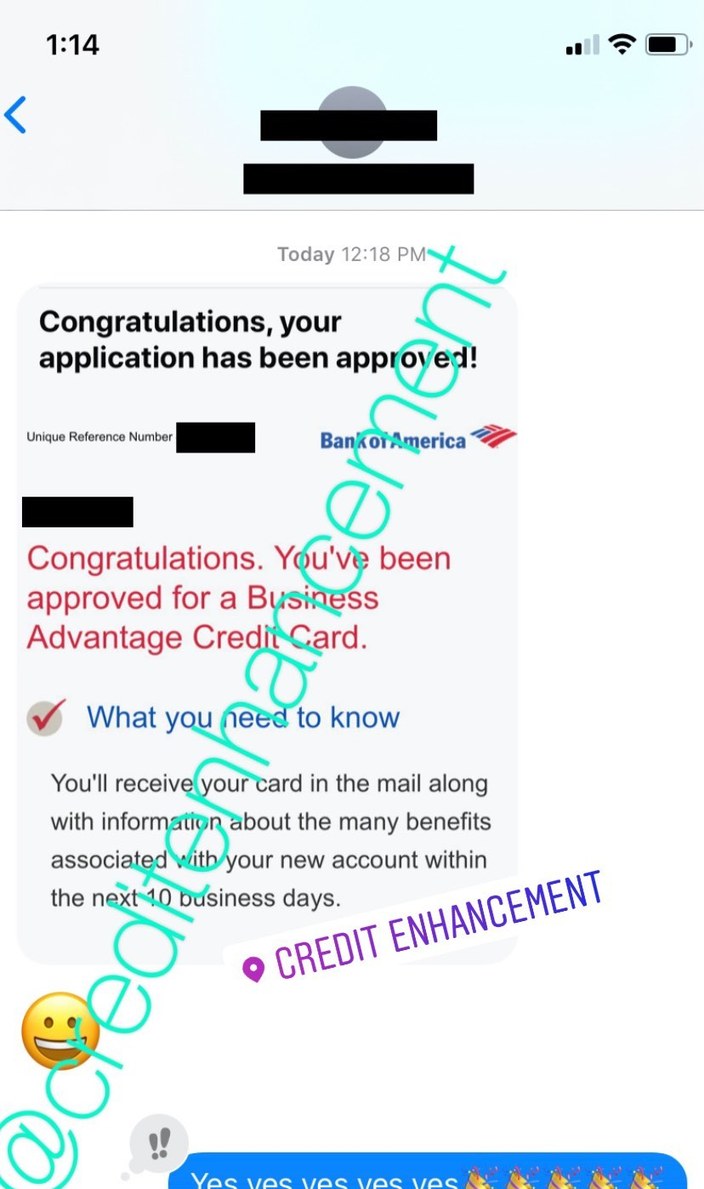
A client was approved for a Bank of America Business Advantage Credit Card in May 2020.
Results vary from person to person and depend on what is in each credit file. Nothing here promises a particular score increase or deletion.
A collection notice in the mail raises more questions than it answers — who the original creditor was, what is actually owed, whether the account is even yours. A dollar lets you read the entries on all three reports yourself, so you know what the bureaus are saying before you respond to anyone.
The entry on the page matters more than the letter in the mailbox. Read the page first.
MyScoreIQ charges $1 for week one, then $34.99 monthly. You can end it at any time.
No two collection accounts look quite the same. We help you tell the differences apart and spot the accuracy problems.
For each collection account we check the reported creditor, who owns the account now, the balance shown, and the account status.
A charge-off is not the same thing as an active collection account. We explain what each of those terms means in credit reporting.
Reported balances, payment history, the dates tied to each entry — we check them all against your own records.
Not every entry is worth disputing. We talk through whether an entry holds inaccurate information that could warrant a dispute with the reporting agency or the information provider.
We help you think through sensible ways to communicate with creditors, look at payment arrangements, and keep good records of everything you do.
Different creditors, different balances, different reporting histories — collection accounts vary a lot. Getting the details straight comes first, before you do anything.
Finding inaccurate information is our focus — not suggesting that every collection entry can be removed.
We go over the collection terms you are likely to hear and help you get ready for conversations with creditors or collectors.
We go through the collection or charge-off entries on your credit reports, one at a time.
Account ownership, balances, dates, reporting status — we help you check each detail.
We help you pick out information that looks inaccurate, incomplete, or at odds with your records.
We lay out dispute options, ways to communicate, and practical credit habits for going forward.
If the information in a collection entry is inaccurate, a challenge may be appropriate, through the reporting agency or the information provider. But accurate collection information generally cannot be removed just because it is unfavorable.
Paying can change how the entry is reported, but it does not take it off your report on its own. The reporting rules decide how long accurate information stays on your file.
Know the account details and your rights before you respond. We can go over common collection terms and what to think about before you call anyone back.
A charge-off is how a creditor reports a debt it has written off; a collection is an account handed to a third party to collect. The two can describe the same debt at different stages, and the dispute itself works the same way: if the entry contains inaccurate information, that may be challenged through a factual dispute.
A collection on your report is not the final word on your finances. Let us talk through what you can do about it. Call (409) 204-1117.